
How Much Does Podcast Editing Cost in 2026? (Real Rates & Pricing Models)
-banner.png)
The Reality of Podcast Editing Costs in 2026
Finding a clear podcast editing cost online is a nightmare. Most sites hide their prices. They want you to book a sales call first.
If you’ve spent hours hunting for clear rates, you know the stress.
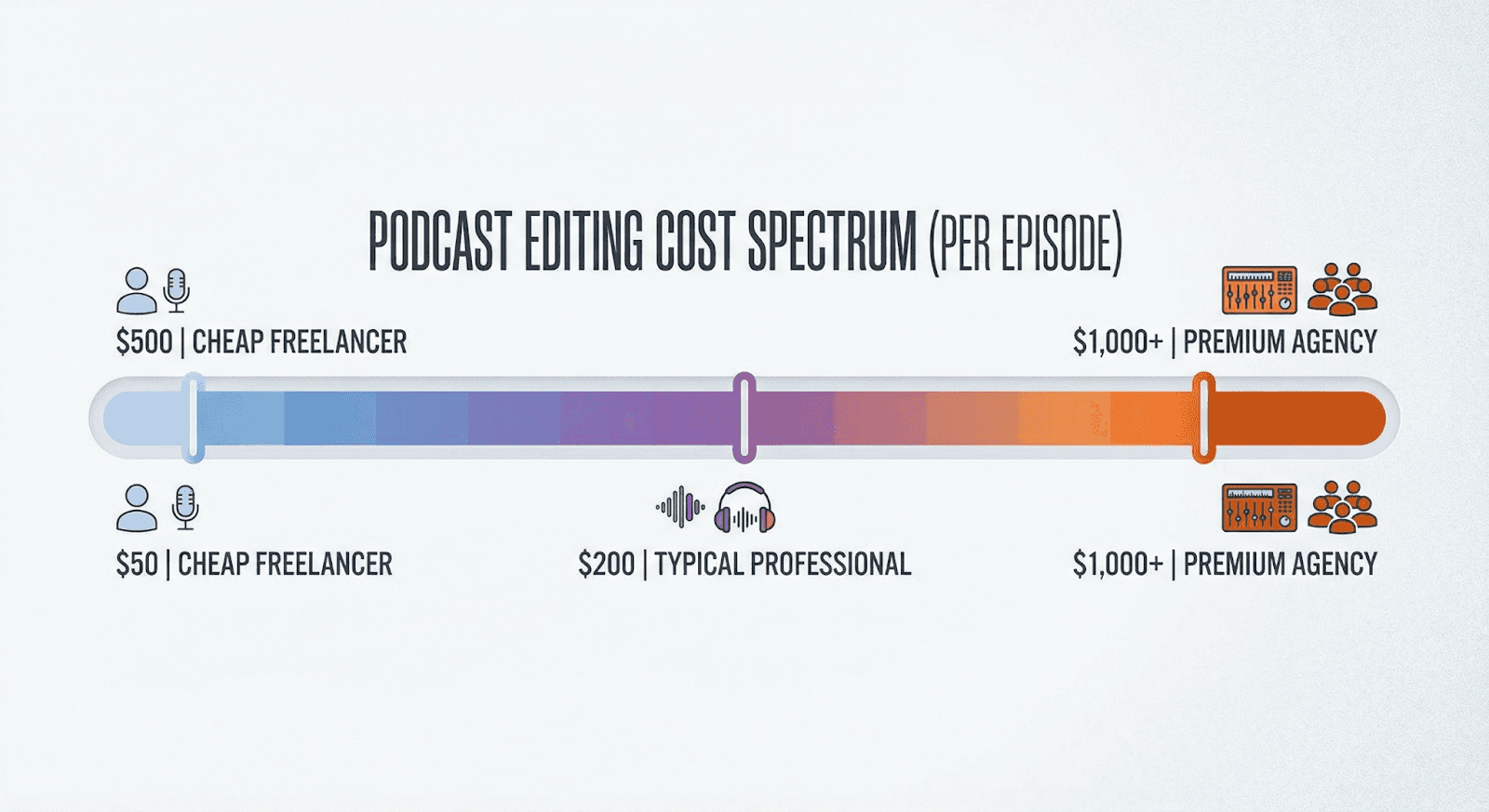
The truth is simple. Prices range from $50 to $1,000 or more per episode.
Source: The Podcast Host
Year: 2023
Finding: Editing a podcast takes about three to four times the length of the raw recording.
Context: This 1:4 ratio directly drives the final price of your post-production budget.
This ratio matters to your post-production budget. If you record a two-hour interview, an editor works for eight hours. They have to listen, cut, and fix mistakes.
Cheap options do exist. But cheap work comes with hidden costs. You end up spending your own time fixing their mistakes.
This does not scale.
Think about paying $50 for a quick cut. You still have to write the show notes and fix the bad audio yourself. A cheap editor also means an unpredictable turnaround time.
If you only post once a month for fun, this won't matter. But a serious brand cannot risk bad audio.
You have three main ways to pay for this work. You can hire a freelancer, hire an agency, or do it yourself.
Why the Price Gap Exists ($50 vs $1,000)
Fiverr is cheap because the workers do not care about your show. A $50 edit gets you basic automated cuts. No one checks for quality.
Most teams learn this the hard way. They hire a cheap freelancer. Then they get a file full of loud breathing and awkward pauses.
Think of this like washing a car. A $50 edit is an automatic drive-thru car wash. It knocks off the dirt but leaves streaks.
A $500 edit is a full professional hand-detailing service. Every inch gets cleaned and polished. A premium edit gives you a dedicated team.
You get proper audio mastering and custom show notes. B2B brands cannot risk the cheap option. Poor audio ruins trust fast.
Listeners will simply turn off a bad recording. This breaks under pressure. A cheap missing freelancer ruins your launch week.
If you just record a hobby show in your garage, the cheap option is fine. But growing brands need a real audio engineer.
A cheap worker is just a basic software user. They click a button and hope for the best. An engineer fixes a bad room echo by hand.
The skill level of the worker changes everything. This directly shapes your final podcast production pricing.
Common Pricing Models Explained
Paying an hourly rate is a dangerous game. If you’ve ever paid a contractor by the hour, you know the invoice anxiety. Freelance podcast editor rates often look cheap at first.
A beginner might quote $30 an hour. But a beginner takes five hours to cut one interview. This punishes you for their slow work.
If you only record short, five-minute updates, an hourly rate might not hurt. For standard shows, hourly pricing breaks budgets.
The flat fee model is much safer. You pay one set price per episode. Most professionals use this flat fee model today.
A flat fee lets you plan your exact budget. You know an episode costs $150 before you record. This shifts the risk back to the editor. If they take ten hours, you pay the same.
The retainer model works best for serious brands. You pay a fixed monthly price for four episodes. This guarantees your spot in their busy schedule.
A retainer fits shows with a strict weekly release. You never worry about missing a Tuesday launch day. A monthly retainer buys you real peace of mind.
What Actually Drives Up Your Post-Production Budget?
Long raw recordings burn cash fast. If you record for two hours, the editor must listen to every minute. A longer file means a bigger bill.
If you only record a simple solo track, this won't matter much. But a real show has multiple voices. Editing three separate guest tracks takes real work.
This is called multitrack mixing. It forces the editor to align every single word.
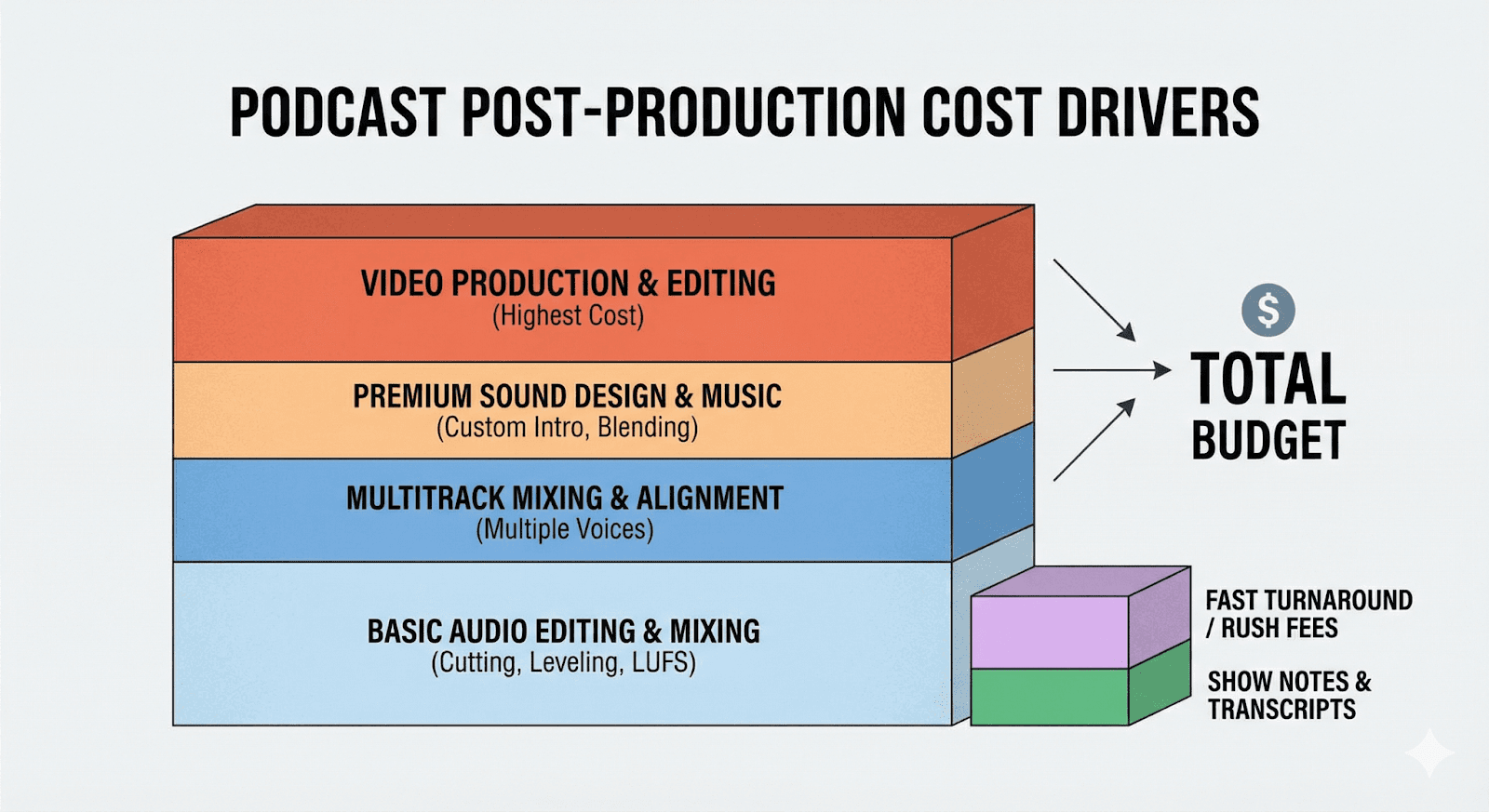
After cutting the bad parts, the audio must sound smooth. Good editors fix the volume levels so it sounds even. They call this standardizing the LUFS.
It is a key part of basic audio mastering.
Adding fancy sound design costs extra money. If you want a custom intro with music, the editor works longer. They have to blend the sounds perfectly.
A fast turnaround time costs a premium. Asking for a file in 24 hours triggers rush fees.
Rush jobs kill budgets.
If you’ve ever rushed a launch, you know the stress of those late fees.
Adding video changes the whole game. A video podcast will double or triple your final rate. You are now paying for a TV show.
Freelance Podcast Editors vs. Production Agencies
Hiring a solo freelancer is a massive risk for a growing brand. Average freelance podcast editor rates fall between $30 and $100 per hour.
If you have zero budget and endless free time, a freelancer makes sense. But if you’ve managed freelancers before, you know the hidden costs.
A solo editor gets the flu on a Tuesday. Your Wednesday launch dies. This is a single point of failure.
Production agencies charge differently. They use flat podcast editing rates per episode. Expect to pay $300 to $1,000 per episode for an agency.
Agencies offer guaranteed delivery. You get a project manager and a full team. B2B brands buy time, not just audio files.
Source: Podcast Insights
Year: 2021
Finding: Roughly 75% of all new podcasts quit within their first year.
Context: The stress of managing the weekly production process causes this massive burnout.
Your total podcast production pricing must account for this stress. Paying a full team keeps you out of the editing software entirely.
How to Choose the Right Option for Your Budget
Your final choice is about buying back your time.
If you only record a local sports show for fun, this choice is easy. A cheap freelancer or free software fits a hobby.
A solo coach selling online courses needs better quality. You should hire a mid-tier freelancer for steady results.
Funded startups and B2B brands cannot afford any mistakes. You must hire a production agency.
Look at your weekly schedule right now. Ask yourself: "Is my time worth more than $50 an hour?"
Most founders quickly realize their time is worth hundreds. Spending five hours fixing audio is a terrible choice.
This kills your growth.
Real peace of mind beats a cheap post-production budget. Stop worrying about your exact podcast editing cost every week.
You need a reliable team to handle the mess. Check out our podcast editing service packages to see our exact rates.
FAQ Section
Do podcast editors charge per hour or per episode?
Most modern agencies charge a flat fee per episode. This stops sudden budget shocks. Hourly rates punish you for slow work.
If you only need a quick fix, hourly is fine. But for weekly shows, this does not scale.
How much should a beginner pay for podcast editing?
Beginners usually pay $30 to $75 per episode. You find these rates on freelance sites.
If you’ve hired from these sites, you know the risk. The audio quality swings wildly. You pay with your own time later.
What is usually included in a standard editing rate?
A standard rate covers the basics. They remove loud background noise. They cut out long awkward pauses.
Good editors fix the volume levels. They also drop in your custom intro music.
Are show notes and video clips included in the editing cost?
Usually, no. Basic audio mastering is the standard baseline.
Written show notes are a premium add-on. Short video clips cost much more. This work requires a completely different skill set.
Is it cheaper to use AI editing software instead of hiring someone?
Software costs less money upfront. You might pay $20 a month. But you pay with your own time.
You still sit at a computer for hours. If your time is cheap, use the software. For busy founders, this breaks under pressure.