
Do You Need to Hire a YouTube Shorts Editor? (Long-form vs. Short-form)
-banner.png)
The Rise of Vertical Video and the Demand for Specialists
Tossing an unedited podcast clip onto YouTube Shorts is a guaranteed way to get zero views.
The rules for vertical video have changed. You cannot just crop a wide shot and hope for the best. This lazy approach fails under pressure.
Source: Alphabet / YouTube Earnings Report
Year: 2023
Finding: YouTube Shorts surpassed 70 billion daily views globally.
Context: This massive scale proves vertical video is a primary consumption format, not just a side feature.
If you have tried to edit your own Shorts, you know the stress of cutting out every single breath.
Editing a standard video is like guiding a reader through a good novel. You can take your time and build the story.
Editing a Short is like designing a billboard on a fast highway. You need instant impact, bold colors, and zero wasted space.
For example, a 10-minute vlog about building a desk needs slow, sweeping camera shots. But a 60-second Short of that same build needs rapid cuts, big text, and a loud hook.
If you only post one Short a month just for fun, this won't matter.
But if you want real growth, you have a hard choice to make. You must either master these fast-paced rules yourself, or look for a short form video editor for hire.
What Makes Short-Form Editing So Different? (The Mechanics of Retention)
Treating a Short like a mini YouTube video is a fast track to zero engagement.
You must use retention editing to survive the endless scroll. This means cutting out every single dead frame to keep audience retention high.
In vertical video, hitting 100% viewer retention is just the floor. You must pack the video with so much information that people watch it twice.
The 9:16 phone screen is also very tight. You must keep faces dead center at all times.
You also have to dodge the like and share buttons on the right side. If you have tried making Shorts, you know the pain of text getting hidden by the app interface.
Repurposing content without changing the pace is a complete waste of time.
For example, taking a calm, unedited podcast interview and simply cropping it will fail. You need dynamic elements to stop the thumb from swiping.
If you only make casual 10-second updates for close friends, ignore this. But for channel growth, the 3-second hook is absolute law. It must grab attention and instantly fulfill a promise.
The Anatomy of a High-Performing Short
A viral vertical video is built entirely differently than a standard edit.
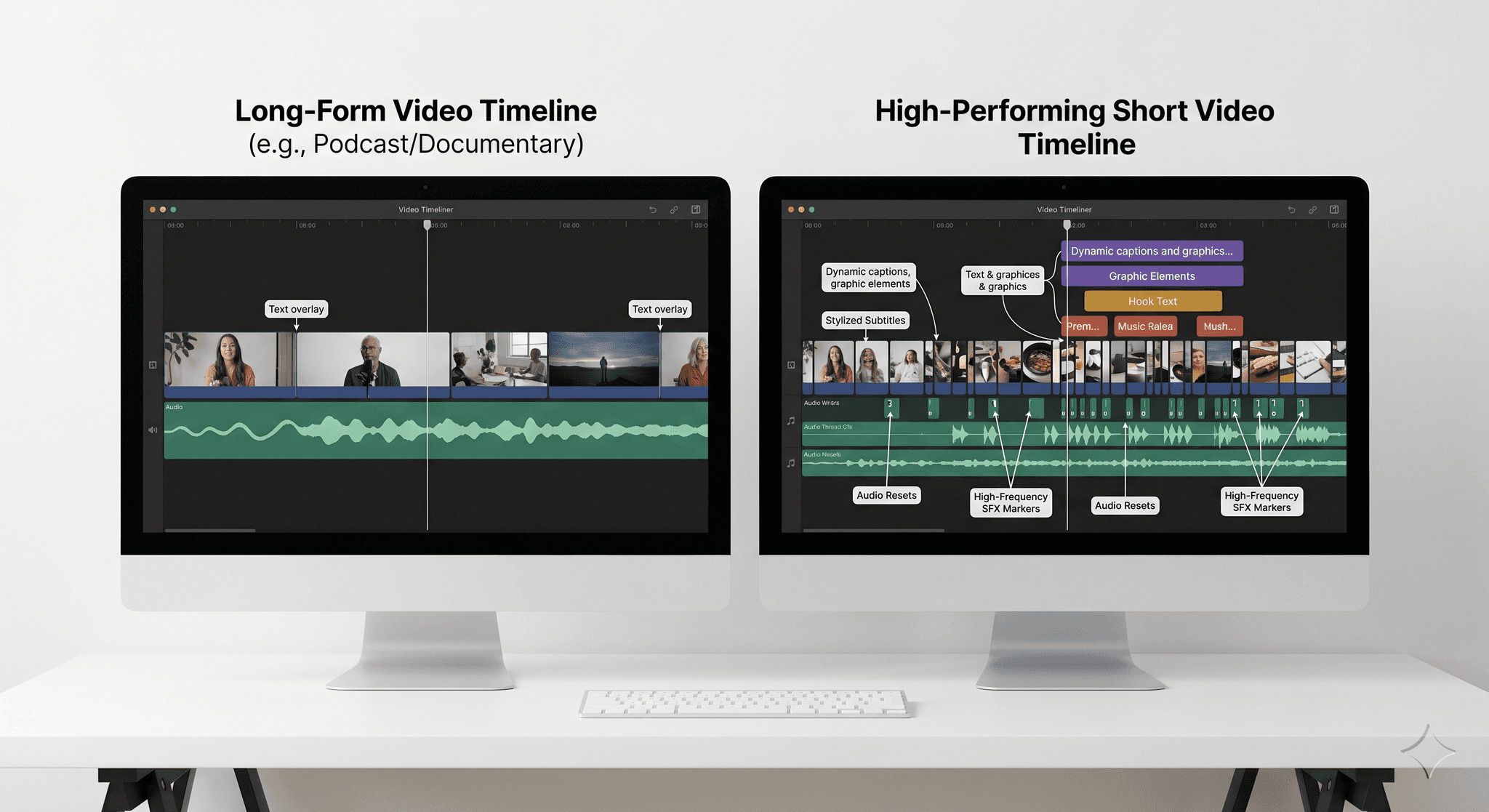
To keep viewers watching, your edit must include:
Stylized subtitles: Plain text is dead. You need bold, active text with engaging motion graphics.
Aggressive B-roll: You cannot just show a talking head. You must flash visual aids or graphics every few seconds.
Audio resets: Use whooshes and pops constantly. These sound effects reset the brain and pull wandering eyes back to the screen.
Zero dead air: Fast-paced cuts are strictly required. You must remove every single breath, pause, and gap in speech.
Long-Form vs. Short-Form Editing: The Skills Comparison
A great documentary editor will likely fail at making a viral TikTok.
Being amazing at one format does not mean you can easily edit the other. Long form vs short form editing is not a minor shift. It is a completely different job.
If you have ever hired a classic film editor for social media, you know the clash.
For instance, a traditional editor will let a scenic drone shot linger for ten seconds. A Shorts editor will cut that same shot after one second and add a loud sound effect.
The software they use also differs. A classic editor will live inside Premiere Pro for precision. A dedicated Shorts editor might use Premiere, but they will also jump into CapCut to grab trending effects instantly.
If you only film slow, unedited lectures for an online class, this gap does not apply to you. But for everyone else, the difference in skill is massive.
Feature/Skill | Long-Form Editor | Dedicated Shorts Editor |
Primary Goal | Deep engagement | Instant retention |
Pacing | Breathing room | Hyper-fast |
Text/Graphics | Minimal/Clean | Aggressive Subtitles |
Audio | Atmospheric | High-stimulus SFX |
Source: Wistia State of Video Report
Year: 2023
Finding: Short-form videos lose up to 50% of their viewers in the first three seconds.
Context: This sharp drop-off proves exactly why you need a specialist to build an instant hook.
Should You Hire a Dedicated Shorts Editor or a Generalist?
Finding one person who edits award-winning podcasts and viral vertical videos is nearly impossible.
If you have ever tried to hire a "do-it-all" video creator, you know the disappointment. Finding a unicorn who excels at both is rare and very expensive.
A generalist will try to treat every video exactly the same. This breaks under pressure.
For example, when repurposing content, a generalist might just chop a random one-minute chunk from your interview. A dedicated shorts editor will hunt through an hour of raw footage just to find the perfect three-second joke.
You could split the roles and hire two separate freelancers. But managing two different people, schedules, and workflows is a massive headache.
Instead of doubling your workload, the best solution is using an agency. We provide experts in both formats under one roof. You get the right specialist for every single video without having to manage multiple hires.
If you only need basic cuts once a year, a generalist is fine. But to scale a real channel, you need specialized talent for each format.
4 Signs It's Time to Hire a YouTube Shorts Editor
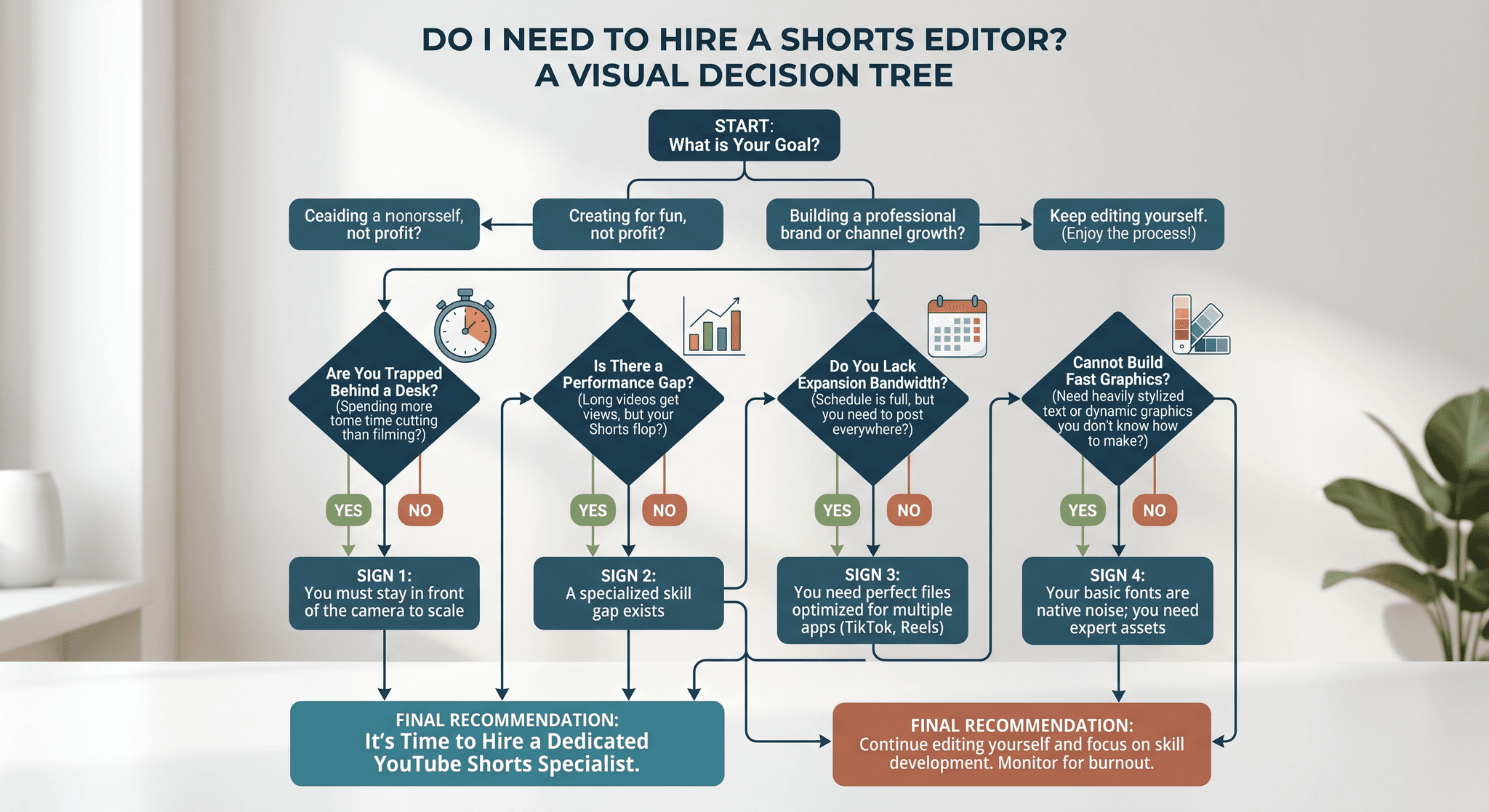
Pushing through burnout to edit your own vertical clips is a massive trap.
If you only make videos as a hobby, this list is not for you.
But if you want to build a real brand, you must watch out for these four signals.
1. You spend more time cutting than filming
If you have ever lost an entire Sunday to editing one minute of video, you know this pain.
For example, you spend five hours fixing a 60-second clip instead of recording three new podcasts.
This does not scale. You must stay in front of the camera, not trapped behind a desk.
2. Your standard videos get views, but your Shorts flop
Your 10-minute videos might perform well, but your vertical clips stall out at twenty views.
This proves a harsh skill gap exists. You are using slow tactics in a hyper-fast space.
3. You want to expand, but lack the bandwidth
You know you must post everywhere, but your schedule is already completely full.
When you hire a YouTube Shorts editor, you are also getting a TikTok editor.
A specialist will give you files perfectly optimized for cross-posting on Instagram Reels too.
4. You cannot build fast graphics
You do not know how to make hyper-fast motion graphics or heavily stylized text.
If you just use basic phone fonts, your video looks like native noise.
You need an expert to build high-contrast assets that force a viewer to stop scrolling.
Conclusion: Master Both Formats Without the Stress
Treating vertical video like an afterthought will kill your channel.
If you only want a hobby, keep editing yourself.
But to master the algorithm today, you must treat Shorts as their own beast. The standard for excellence is higher than ever.
If you have ever stared at a video timeline until 2 AM, you know the burnout.
For example, you should be planning your next big podcast interview, not struggling to sync text effects. You must focus entirely on filming.
Having experts handle the fast-paced cuts is the only way to scale.
You do not need to struggle alone. If you want to hire a YouTube Shorts editor and finally grow, it is time to hire a YouTube video editor.
Frequently Asked Questions
How much does a dedicated Shorts editor cost?
Pricing changes based on skill. You can pay per video, usually $15 to $50 or more. Some charge a flat monthly fee. Agencies often group Shorts into bigger editing plans for a better deal.
Can I just use AI to cut my long videos into Shorts?
If you only want cheap, rough cuts, AI is fine. AI tools can chop up clips and add plain text. But they fail at real comedy timing.
If you have used auto-clippers, you know they often cut sentences in half. For instance, AI will ruin a punchline by cutting too fast. For true retention editing, AI is a complete joke. It cannot match a human eye.
Do YouTube Shorts editors also edit for TikTok and Reels?
Yes. The vertical screen size is exactly the same on all apps. A good editor gives you one file that works everywhere. You can post the exact same video to YouTube, TikTok, and Instagram.
What software do the best short-form editors use?
Most pros use Adobe Premiere Pro or After Effects to build complex graphics. But many also use tools like CapCut. CapCut is powerful because it has fast, trending effects built right in.